

Our History
For more than 100 years, the Labour movement has played a major part in the story of Newcastle upon Tyne. From the trade unionists who first fought to give working people a political voice, through generations of Labour councillors, MPs and campaigners, Newcastle Labour has helped shape the city we know today. This is our story.
1873 – Before Newcastle Labour
Our story begins before the Labour Party itself existed.
During the 1800s Newcastle was transformed by industry. Shipbuilding, engineering, mining and the railways brought thousands of working people into the city.
As industry grew, so did the trade union movement. Working people started demanding better conditions at work and a greater say in how their communities and country were run.
In 1873, the Newcastle, Gateshead and District Trades and Labour Council was established, becoming an important voice for organised workers across Tyneside. Newcastle also hosted the Trades Union Congress (TUC) in 1876 and again in 1891.
These were the foundations from which Newcastle Labour would eventually grow.

1892 – Arthur Henderson and the early labour movement
Before there was a Labour Party, candidates representing the interests of working people were already beginning to win elections in Newcastle.
Trade union representatives were elected to Newcastle Council in 1883 and 1891, and in 1892 Arthur Scott and Arthur Henderson were elected as Lib-Lab representatives.
Henderson would go on to become one of the most important figures in the history of the Labour movement. More on that later.
His time in Newcastle provides an important link between the Victorian trade union movement and the Labour Party that followed.

1900 – A new political voice for working people
By the end of the 19th century, a growing number of trade unionists believed working people needed their own political voice.
The Labour Representation Committee (LRC) was formed nationally in 1900, bringing together trade unionists and socialist organisations. Six years later it adopted the name we know today, The Labour Party. Newcastle would soon play its own part in this new movement.
1902 – David Adams elected to Newcastle City Council
In 1902, David Adams was elected to Newcastle City Council for the Labour Representation Committee. He was Newcastle’s first councillor representing the organisation that would become the Labour Party.
Adams became chairman of the local LRC and was a leading advocate for better housing. At a time when many working families lived in overcrowded and poor-quality homes, housing became one of the first great political campaigns by Newcastle Labour.
Adams remained involved in Newcastle public life for decades, later serving as Lord Mayor of Newcastle in 1930–31 and as a Labour MP. In 1940 he was awarded the Honorary Freedom of Newcastle in recognition of his long service to the city.
1914 – Labour grows on Newcastle City Council
Labour did not become Newcastle’s main political party overnight. For years the new party competed with the Liberals and Conservatives for the support of working people. But it continued to grow.
By 1914, Labour had nine representatives on Newcastle City Council. A political movement that had barely existed at the beginning of the century was establishing permanent roots in the city.

1920s and 1930s – Labour establishes itself
Between the First and Second World Wars, Labour continued to grow across Newcastle.
A significant figure at this time was Charles Trevelyan, who had previously been a Liberal MP before joining Labour. He represented Newcastle Central from 1922 until 1931 and served as President of the Board of Education in the first two Labour governments.
At the same time, Newcastle Labour was gaining in local government and establishing itself in the industrial and working-class communities of Newcastle.
By the outbreak of the Second World War, Newcastle Labour was a major political forces in the City.

1958 – Labour takes control of Newcastle
For the first time, Labour won control of Newcastle City Council in the 1958 local elections and faced enormous challenges. Thousands of people still lived in overcrowded Victorian housing, traditional industries were changing and parts of the city desperately needed investment.
One of the most influential figures in the new Labour administration was a Walker councillor called T. Dan Smith.

1959–1965 – T. Dan Smith: ambition, transformation and controversy
T. Dan Smith became Leader of Newcastle City Council in 1959 and he had big ambitions for the City.
He wanted to transform it from an industrial city into a modern regional capital, a “Brasília of the North”.
Under Labour, large areas of old and poor quality housing were cleared. Thousands of families moved from homes without bathrooms, indoor toilets or modern heating into new modern housing.
A powerful new planning department was created and plans were developed for new roads, housing and major redevelopment. The most visible symbol of this period became Newcastle Civic Centre.
Construction began in 1960 and the building eventually opened in 1968, creating a new home for the city’s local government.

The redevelopment of Newcastle remains controversial. Some projects transformed living conditions and helped modernise the city. Others resulted in the demolition of established streets and communities, and debates about the planning decisions of this era continue today.
Smith’s own political career ended in disgrace, after leaving the council leadership, he became involved with architect John Poulson and was eventually convicted of corruption and sent to prison.

1965–1974 – Political change
Smith stepped down as council leader in 1965. He was succeeded by Labour’s Frank Butterfield, followed in 1966 by Bert Abrahart.
Labour lost control of the council in 1967, beginning several years of Conservative control.
But major changes to local government were approaching.

1974 – A new Newcastle City Council
Local government across England was reorganised in 1974. A new Newcastle upon Tyne City Council was created as one of the metropolitan districts of the new county of Tyne and Wear.
Newcastle Labour won control of the new authority and Tom Collins became Leader of the Council.
The new council had major responsibilities for housing, education, social services, planning and regeneration.

1977–1994 – The Jeremy Beecham era
Few people have given more public service to Newcastle than Jeremy Beecham. First elected to Newcastle City Council in 1967 at just 22 years old, Jeremy became Council Leader ten years later in 1977.
He would be leader for 17 years, making him the longest-serving Leader of Newcastle City Council.
His approach was very different from the grand plans associated with past leaders.
His council concentrated on housing, education, social services and supporting Newcastle’s poorest communities. It also worked to rebuild trust in local government.
The city faced huge economic challenges during the 1980s. Under Thatcher’s Conservative Government traditional industries which the City relied on disappeared, unemployment rose and communities that had depended on manufacturing and heavy industry were badly affected.
The council invested in deprived neighbourhoods, worked to create and protect jobs and sought to maintain essential local services.
egeneration also became increasingly important as Newcastle searched for a new economic future beyond the industries that had sustained the city for generations.
Jeremy’s influence extended far beyond Newcastle. He was a leading national voice for local government, chaired Labour’s National Executive Committee, was knighted and later entered the House of Lords.
He remained a Newcastle councillor until 2022, representing the people of Benwell, Scotswood and Denton Burn for 55 years. His death in April 2026 marked the passing of one of the most significant figures in Newcastle Labour’s history.

1994–2004 – Regenerating Newcastle
Tony Flynn succeeded Jeremy Beecham as Council Leader in 1994 and led the city for the following decade.
By the 1990s, Newcastle’s economy had changed dramatically. The decline of traditional industries meant the city needed new jobs, investment and opportunities and regeneration accelerated.
Newcastle’s Quayside was transformed, the city centre continued to develop and the importance of universities, culture, leisure, retail and service industries grew.
The regeneration of the wider Newcastle Gateshead riverside involved many organisations and both councils, but its impact was dramatic. Former industrial sites were brought back into use and the Tyne increasingly became a focal point for culture, tourism and leisure.

2004–2011 – Labour in opposition
The 2004 local elections brought new ward boundaries and every seat on Newcastle City Council was contested, the Lib Dems won the most seats and would run the council for seven years with Newcastle Labour in opposition.
But it didn’t take long for the people of Newcastle to have enough of the Lib Dems in Newcastle, and the Conservative and Lib Dem Coalition Government in 2010 was the final straw.
In 2011 Newcastle Labour made major gains across the city and returned to power with Nick Forbes becoming Leader of Newcastle City Council.
2011–2022 – Labour returns: austerity, devolution and a pandemic
Nick Forbes Newcastle Labour administration faced a very different challenge from its predecessors. The Conservative-Lib Dem Government’s austerity programme resulted in huge reductions to local government funding.
Over the following years, Newcastle had to find hundreds of millions of pounds of savings while continuing to provide services to residents. in total £300 million would be cut from Government funding over the thirteen years.
Newcastle Labour campaigned against the cuts while trying to protect essential services and the communities most affected.
At the same time, Newcastle continued to pursue economic growth, regeneration and new housing.
The city was among the first places in the country to secure a City Deal, bringing new investment and greater local control. Newcastle also played a central role in developing devolution for the North East.
The final years of Nick Forbes’ leadership included one of the greatest challenges Newcastle had faced in generations, the Covid-19 pandemic which affected every community in the city. Council staff, NHS workers, volunteers, charities and community organisations worked together to support vulnerable residents and keep essential services running.
After 11 years as Council Leader, Nick Forbes stepped down in 2022 and was briefly followed by Nick Kemp until September 2024.

2024 – Newcastle’s first woman Council Leader
October 2024 brought another historic milestone when Karen Kilgour became the first woman in Newcastle’s history to serve as Leader of Newcastle City Council.
More than 120 years after David Adams entered the council for the Labour Representation Committee, Newcastle Labour was led for the first time by a woman.
Her administration focused on tackling inequalities, improving housing, supporting communities and continuing Newcastle’s journey towards net zero.

2026 – A new political landscape
The local elections of May 2026 brought one of the biggest changes in Newcastle politics for decades. New ward boundaries came into force and all 78 council seats were contested. No political party won an overall majority.
Labour lost control of the council and returned to opposition, the Lib Dems formed a minority administration following an agreement with the Green Party.
Cllr Ged Bell became Leader of the Newcastle Labour Group, beginning another chapter in our history.
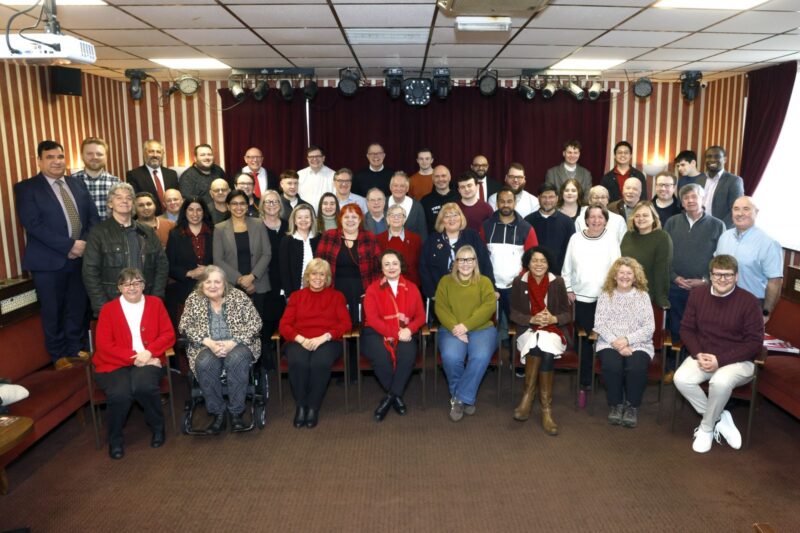
Labour representing Newcastle in Parliament
Alongside Labour’s history in local government, generations of Labour MPs have represented Newcastle and its communities in Westminter.
The story stretches back to the earliest days of the Labour Party and includes MPs who went on to hold some of the most senior positions in British politics.
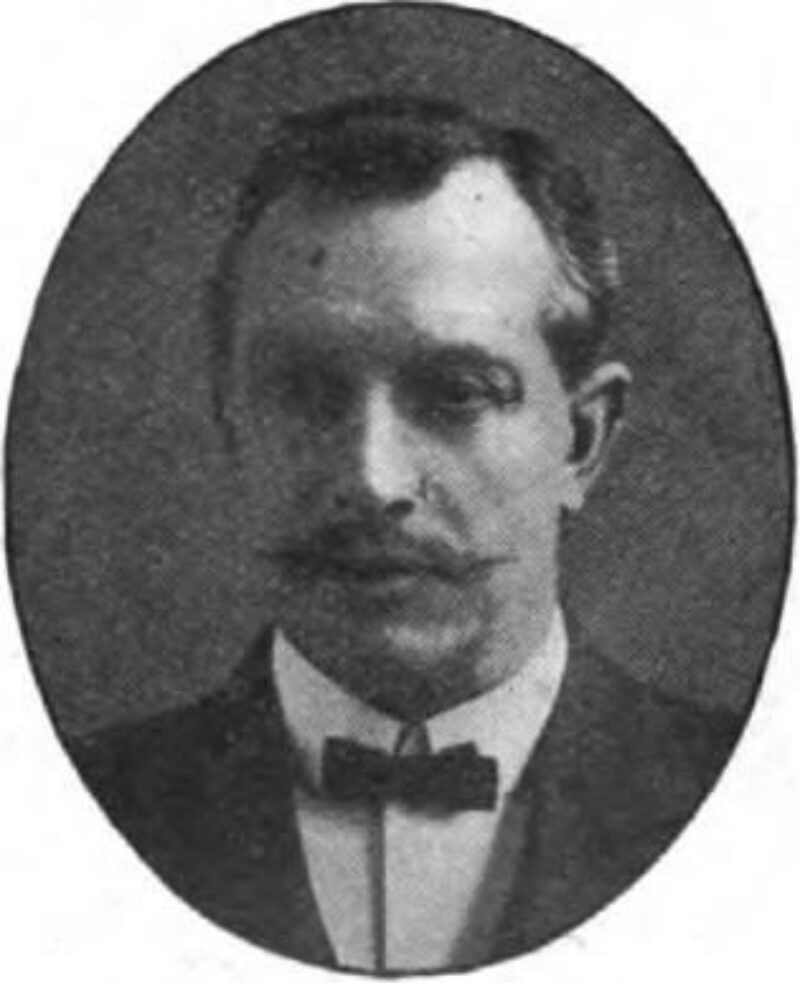
1906 – Walter Hudson makes history
At the 1906 General Election, Walter Hudson was elected Labour MP for Newcastle upon Tyne.
Hudson was a railway worker and trade unionist who had spent many years working for the North Eastern Railway.
He was one of just 29 Labour MPs elected in 1906, the group that became the founding Parliamentary Labour Party, meaning Newcastle has a direct link to one of the defining moments in the history of the Labour Party.
1922 – Labour makes major gains
The 1922 General Election marked another breakthrough for Labour in Newcastle when three Labour MPs were elected across the city.
David Adams, Newcastle’s pioneering Labour councillor, was elected MP for Newcastle upon Tyne West.
Charles Trevelyan was elected for Newcastle upon Tyne Central. Trevelyan went on to serve as President of the Board of Education in both the 1924 and 1929–31 Labour governments and played an important role in the development of education policy.
In Newcastle East, trade union leader Joseph Nicholas Bell was elected for Labour. Tragically, Bell died just 22 days after the election.
His death led to a by-election in January 1923 – and the return to Newcastle politics of Arthur Henderson.

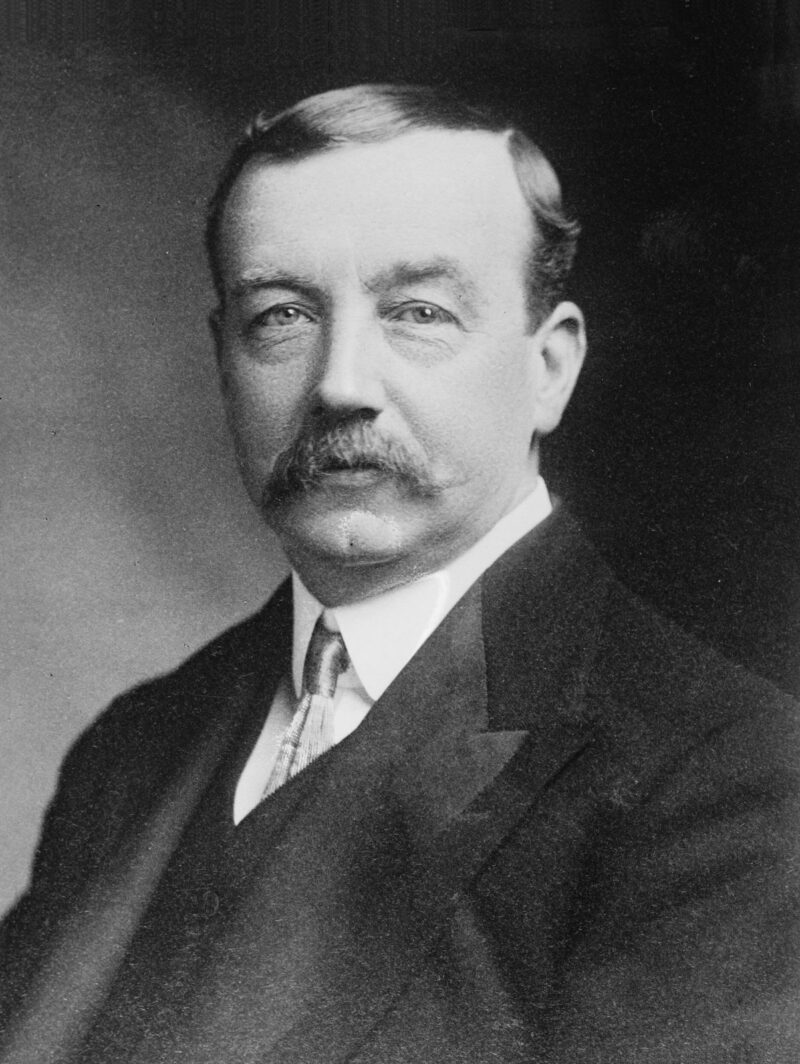
1923 – Arthur Henderson returns to Newcastle
Arthur Henderson was elected Labour MP for Newcastle East at the resulting by-election.
More than 30 years earlier, Henderson had been elected to Newcastle City Council as a Lib-Lab representative. He subsequently became one of the founding figures of the modern Labour Party.
His time as Newcastle East MP was brief, he lost the seat at the December 1923 General Election, but his wider political career was extraordinary.
Henderson served three times as Leader of the Labour Party, became one of the first Labour Cabinet Ministers, served as Home Secretary and Foreign Secretary and was awarded the Nobel Peace Prize in 1934 for his work for international disarmament.
1924–1931 – Labour strengthens its position
Labour representation expanded again at the 1924 General Election.
John Palin was elected for Newcastle West and represented the constituency until 1931.
Martin Henry Connolly won Newcastle East and served until 1929.
Charles Trevelyan continued to represent Newcastle Central.
By this point Labour had developed from a small new political movement into a major force in Newcastle politics.
The 1931 General Election, held during a period of national political and economic crisis, saw Labour lose its Newcastle seats to its opponents. But Labour would return.

1945 – Newcastle turns Labour
The 1945 General Election was one of the most important elections in British history.
Clement Attlee led Labour to a landslide victory and a government that would create the National Health Service, build hundreds of thousands of homes and establish much of the modern welfare state. Newcastle played its part in that victory, all three Newcastle constituencies elected Labour MPs.
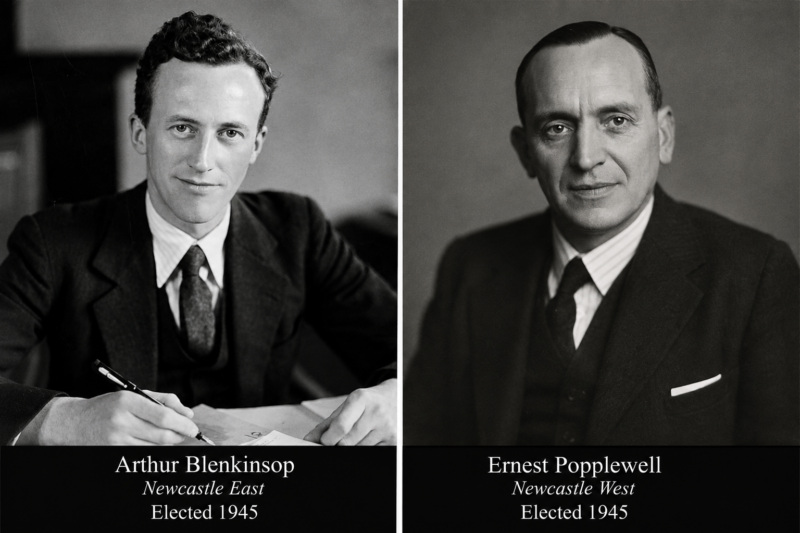
Arthur Blenkinsop was elected for Newcastle East.
Major Lyall Wilkes was elected for Newcastle Central.
And Ernest Popplewell was elected for Newcastle West.
It began a new period of strong Labour parliamentary representation in the city.
Arthur Blenkinsop
Blenkinsop represented Newcastle East for 14 years, from 1945 until 1959. He served in Clement Attlee’s government, including as Parliamentary Secretary to the Ministry of Health, during the formative years of the newly created NHS.
Lyall Wilkes
Wilkes captured Newcastle Central from the Conservatives with almost 62% of the vote, he represented the seat until 1951, when he was succeeded by Ted Short. After leaving Parliament, he returned to the law and later became a County Court judge.
Ernest Popplewell
Popplewell represented Newcastle West for more than 20 years, remaining its Labour MP until his retirement in 1966. He was subsequently appointed to the House of Lords as Baron Popplewell.
1951 – Edward Short begins 25 years representing Newcastle
In 1951, Edward “Ted” Short was elected Labour MP for Newcastle Central.
He would represent the constituency for almost exactly 25 years and become one of the most senior Labour politicians Newcastle has produced.
Short served in Harold Wilson’s governments as Secretary of State for Education and Science and later Leader of the House of Commons. In 1972 he was elected Deputy Leader of the Labour Party, serving under Harold Wilson and later James Callaghan.
He stepped down from Parliament in 1976 and was subsequently appointed to the House of Lords as Baron Glenamara of Glenridding.
1964–1983 – A changing generation
Other Labour MPs represented Newcastle as the city went through the enormous social and economic changes of the 1960s and 70s.
Geoffrey Rhodes, a Labour and Co-operative MP, represented Newcastle East from 1964 until his death in 1974.
Robert Brown was elected for Newcastle West in 1966 and, following boundary changes, represented Newcastle North from 1983 until his retirement in 1987. Altogether, he represented Newcastle in Parliament for more than 21 years.
Following Edward Short’s departure, Harry Cowans won Newcastle Central for Labour at a 1976 by-election. After the 1983 boundary changes he represented the new Tyne Bridge constituency until his death in 1985.
Mike Thomas was elected as a Labour and Co-operative MP for Newcastle East in October 1974. He left Labour for the newly formed SDP in 1981 and as a result lost Newcastle East at the 1983 General Election.
That election would bring another generation of Newcastle Labour MPs to Westminster.
1983–2010 – A generation of long-serving Labour MPs
At the 1983 General Election, Nick Brown won Newcastle East for Labour. He would go on to represent the constituency for more than 40 years, making him one of the longest-serving MPs in Newcastle’s history.
During Labour’s period in government after 1997, Brown held a number of senior positions. He served as Minister of Agriculture, Fisheries and Food and became one of the longest-serving Government Chief Whips in modern times.
Two years after Brown’s election, David Clelland won the Tyne Bridge constituency for Labour in a 1985 by-election. Clelland represented communities on both sides of the Tyne for almost 25 years, remaining MP until the constituency was abolished in 2010.
Then, in 1987, Labour made two further Newcastle gains.
Jim Cousins won Newcastle Central from the Conservatives and Doug Henderson won Newcastle North. Both would represent their constituencies for almost 23 years.
Doug Henderson also served in Tony Blair’s Labour Government, including as a minister at the Foreign Office and Ministry of Defence.
Together, Brown, Clelland, Cousins and Henderson formed a generation of Labour MPs who represented Newcastle through the final years of Margaret Thatcher’s government, the regeneration of the 1990s and the Labour governments elected from 1997.
2010 – A new generation
The 2010 General Election brought major change. David Clelland, Jim Cousins and Doug Henderson all retired, while parliamentary boundary changes abolished the Tyne Bridge constituency. Two new Labour MPs were elected.
Chi Onwurah succeeded Jim Cousins in Newcastle Central.
Born in Newcastle and an engineer before entering Parliament, her election made her Newcastle’s first black MP. She has since held a number of frontbench roles, particularly covering science, technology, innovation and industrial policy.
Catherine McKinnell was elected Labour MP for Newcastle North at the same election. She has held a number of parliamentary and government roles and has represented the constituency continuously since 2010.
Nick Brown continued to represent Newcastle East, meaning Labour once again held all three Newcastle constituencies.

2024 – New constituencies, continued Labour representation
Parliamentary boundaries changed again for the 2024 General Election.
Chi Onwurah was elected for the new Newcastle upon Tyne Central and West constituency, continuing the parliamentary service she began in 2010.
Catherine McKinnell was re-elected in Newcastle upon Tyne North.
And Mary Glindon became MP for the new Newcastle upon Tyne East and Wallsend constituency. She had previously represented North Tyneside in Parliament before the boundary changes.
With Labour also having MPs in Hexham (which includes part of Outer West Newcastle) and Cramlington and Killingworth (which includes part of the North of Newcastle) it means that today every parliamentary constituency covering Newcastle upon Tyne continues to be represented by a Labour MP.
More than a century of Newcastle Labour
The Newcastle of today would be almost unrecognisable to the trade unionists who began organising here in the 19th century.
The industries have changed. Communities have changed. The city itself has changed. Newcastle Labour has changed too.
Our history includes great achievements and difficult periods. It includes people who went on to shape national politics and thousands more whose names may never appear in history books – councillors, trade unionists, members, volunteers and campaigners who worked to improve their communities.
From Arthur Henderson and David Adams, through Walter Hudson, Edward Short, T. Dan Smith, Jeremy Beecham, Tony Flynn, Nick Forbes, and Karen Kilgour, generations of Labour representatives have played their part in Newcastle’s story.
Today, Newcastle Labour is once again in opposition at the Civic Centre, but our movement is much bigger than any election result.
More than 150 years after Newcastle’s organised labour movement began, and more than 120 years after David Adams was elected to the council, Labour members and campaigners continue working in communities across our city.
Our history is still being written… Join us to be part of it
A history still being researched
The history of Newcastle Labour is much bigger than can be told on a single webpage. We are particularly interested in preserving the stories of the councillors, MPs, trade unionists, members and campaigners who helped build the Labour movement in Newcastle.
If you have old Newcastle Labour photographs, election leaflets, posters, newsletters, membership material or memories of campaigning in the city, we would love to hear from you.
Contact Stephen at [email protected]
Sources and further reading
This history has been compiled using council records, parliamentary records, archive material, contemporary newspapers and published research. Newcastle Labour is grateful to the many archives and organisations that preserve the political and social history of our city.
For readers who would like to explore Newcastle’s political history further, some of the main sources used in preparing this page include:
- Newcastle City Council – council records, election results, biographies and material on the history of local government in Newcastle. Newcastle City Council
- UK Parliament – parliamentary records, historic election information and biographies of MPs who have represented Newcastle. UK Parliament – MPs and Lords
- Hansard – the official record of debates in Parliament, including contributions made by generations of Newcastle Labour MPs. Historic Hansard
- Newcastle University Special Collections & Archives – including the Charles Philips Trevelyan Archive, which contains photographs, correspondence and political material from Trevelyan’s career and his time as Labour MP for Newcastle Central.
- Newcastle University Courier Archive – a valuable record of political and social life in Newcastle, particularly during the second half of the twentieth century. Courier Digital Archive
- North East History, the journal of the North East Labour History Society – particularly research into the development of Labour politics and municipal housing in Newcastle. The journal records the election of early trade-union representatives to the council and David Adams’s election for the Labour Representation Committee in 1902.
- Labour Heritage – research into the history of the Labour Party and labour movement, including Jim Cousins’ history of Walter Hudson, Newcastle’s first Labour MP.
- Tyne & Wear Archives & Museums / North East Museums – historic photographs, documents and collections recording Newcastle’s changing communities, industries and built environment.
- Newcastle Libraries Local Studies & Family History – historic photographs, newspapers, maps and local records documenting the development of Newcastle.
- The National Archives – historic government and political records, including Labour Party material from the 1920s.
- People’s History Museum – collections documenting the history of democracy, trade unions and the Labour movement in Britain.
- The National Portrait Gallery – historic portraits of political figures including Newcastle MPs Arthur Blenkinsop and Ernest Popplewell.
- The Library of Congress – historic photographic collections, including the George Grantham Bain Collection photograph of Arthur Henderson used on this page.
Election results have also been checked against official election records, parliamentary records and contemporary reports.
Photographs and archive material are individually credited in their captions wherever possible. Copyright remains with the respective photographers, archives and rights holders.